Does When You Eat Matter for Weight Loss? Meal Timing, Examined Honestly
Meal timing is weight loss’s most oversold variable — the eating windows, the breakfast wars, the after-8pm fear — and the evidence says something calmer: totals rule, but timing quietly shapes the totals. The honest examination.

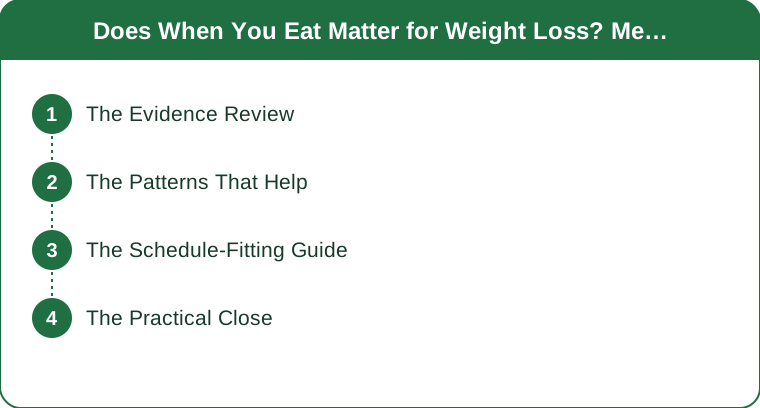
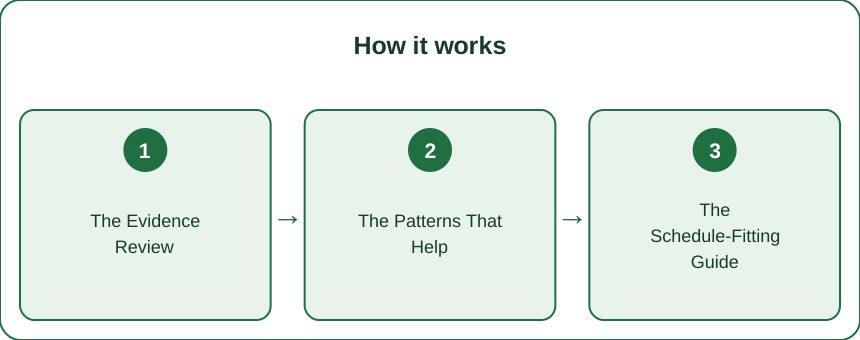
The Evidence Review
What actually matters: the calories-rule foundation (the total intake dominating every timing effect in controlled studies — the same calories at different times producing similar weight outcomes; the timing being a second-order variable per the deficit doctrine), the circadian signal (the late-eating studies showing modest metabolic disadvantages — the evening insulin sensitivity dip from the glucose doctrine; the real-but-small effect that marketing inflates), the breakfast honesty (the breakfast-skipping being neither fatal nor magic — the skipped-breakfast-then-ravenous pattern hurting SOME people behaviorally; the protein-breakfast benefits from the breakfast doctrine being about appetite control, not metabolism magic), the eating-window findings (the time-restricted-eating trials averaging out to modest benefits that track CALORIE reduction — the window working mostly by cutting grazing hours; the mechanism being behavioral more than metabolic), and the honest summary (the timing mattering maybe 10-20 percent as much as totals — the variable worth optimizing AFTER the fundamentals per the priority doctrine).
The Patterns That Help
Timing as behavior design: the front-loaded day (the bigger breakfast-and-lunch with the lighter dinner — the appetite-and-glucose advantages; the pattern that fights evening grazing per the evening doctrine), the eating-window pragmatism (the 10-12 hour window as gentle structure — the kitchen-closed-at-8 rule from the habit doctrine; the window chosen for YOUR schedule, not the influencer’s 16:8), the regular-meals defense (the consistent mealtimes preventing the ravenous-decisions from the glucose doctrine — the skipped-lunch 4pm vending run; the regularity being the timing advice with the best receipts), the post-dinner boundary (the evening grazing being most people’s silent surplus — the after-dinner hours audit; the tea-and-close ritual from the evening doctrine), the pre-sleep buffer (the last big meal two-three hours before bed — the sleep-quality dividend from the sleep doctrine feeding back into appetite), and the training-day note (the fuel-timing from the fuel doctrine coexisting fine — the workout nutrition being performance timing, not weight-loss timing).

The Schedule-Fitting Guide
Timing for real lives: the shift-worker translation (the ‘evening’ being relative to YOUR day — the night-shift eating from the shift doctrine; the window anchored to the personal wake-sleep arc), the family-dinner reality (the 7pm family table outranking the 6pm cutoff — the social meal’s value per the family doctrine; the lighter-plate compromise over the skipped ritual), the social-life clause (the late dinner out enjoyed fully — the pattern judged weekly per the 80/20 doctrine; the one late meal changing nothing), the personal-pattern discovery (the two-week timing journal — the energy-and-hunger notes that reveal YOUR best structure per the tracking doctrine; the larks front-loading and the owls shifting later, both fine), the non-negotiables list (the protein distribution and the regular-ish rhythm mattering more than clock times — the anchors from the protein doctrine), and the anti-rule stance (the timing rules serving the person — the rule that increases stress or breaks social eating costing more than it saves per the sustainable doctrine).
The Practical Close
Putting it together: the priority order (the deficit first, the protein second, the food quality third, the timing fourth — the optimization sequence from the priority doctrine; the timing polished only when the top three hold), the two-move summary (the most-useful timing changes being the protein breakfast and the post-dinner kitchen close — the front-and-back bookends that shape everything between), the myth retirement (the after-8pm calories not counting double — the metabolism not punishing the clock; the late eater’s weight gain being the extra EATING, not the hour per the myths doctrine), the experiment invitation (the one-timing-change trial for a month — the earlier dinner or the closed kitchen; the personal data over the debate), and the calm conclusion (the when mattering a little and the what-and-how-much mattering a lot — the timing anxiety retired; the schedule built around your life, which is the only one that lasts). Totals first, bookend the day, close the kitchen: the clock, right-sized.
Totals rule — timing is worth maybe 10-20% of the attention. The two moves with real payoff: a protein breakfast that governs appetite, and a closed kitchen after dinner that deletes the silent grazing surplus. After-8pm calories don’t count double; late eaters gain from extra eating, not the hour.
Keep Reading
This article is for general informational and styling purposes only. Fit, sizing, and product availability may vary.